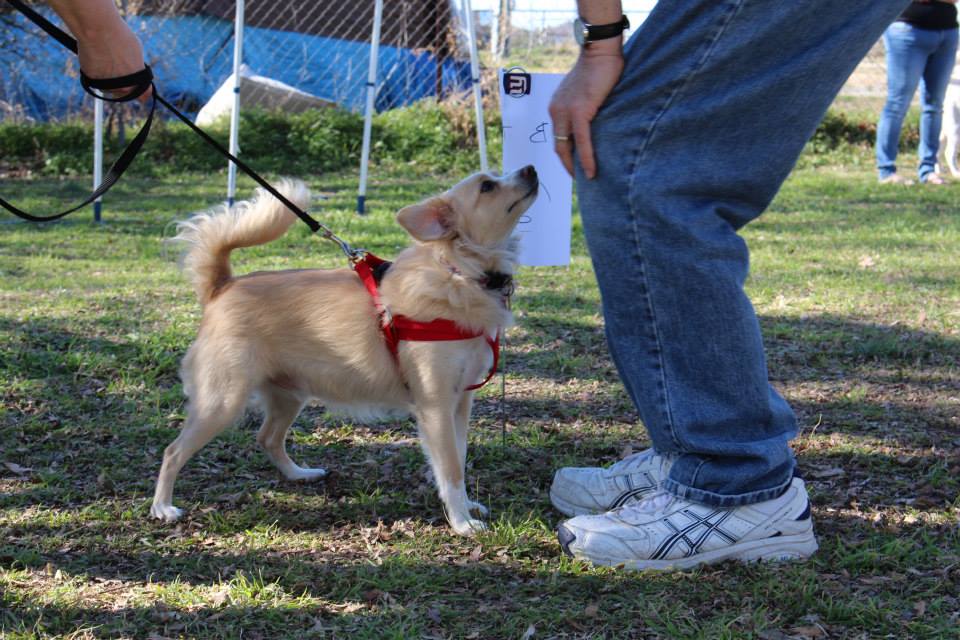
Lola, the dashing diva!!

Jo Anne & Brad adopted Lola, after they read her Craigslist ad placed by Austin Pets Alive. Lola had been hit by a car and knocked out cold. The person that had seen the accident rushed her to the emergency clinic where it had been touch and go! With some fantastic vet care and a fighting spirit, Lola pulled through and was sent on to an awesome foster family.

Lola was 10 months and exactly what Jo Anne & Brad needed for their other dog Bingo; a little playmate and companion.

Lola is very perky and always has some kind of toy in her mouth. She is a precision squeaker remover, barks when her big brother Bingo barks, and follows his lead if he runs to investigate something!

“No one even realizes Lola is deaf, her body language and behaviors are just like any other dog out there.” Jo Anne states about little Lola.

Jo Anne also makes a great point when asked if she would adopt another deaf dog, “Yes. She doesn’t get bothered by thunder- it’s a great quality in a dog.”

Come by our TDAWG classes or events to see little Lola and her TDAWG friends in action.
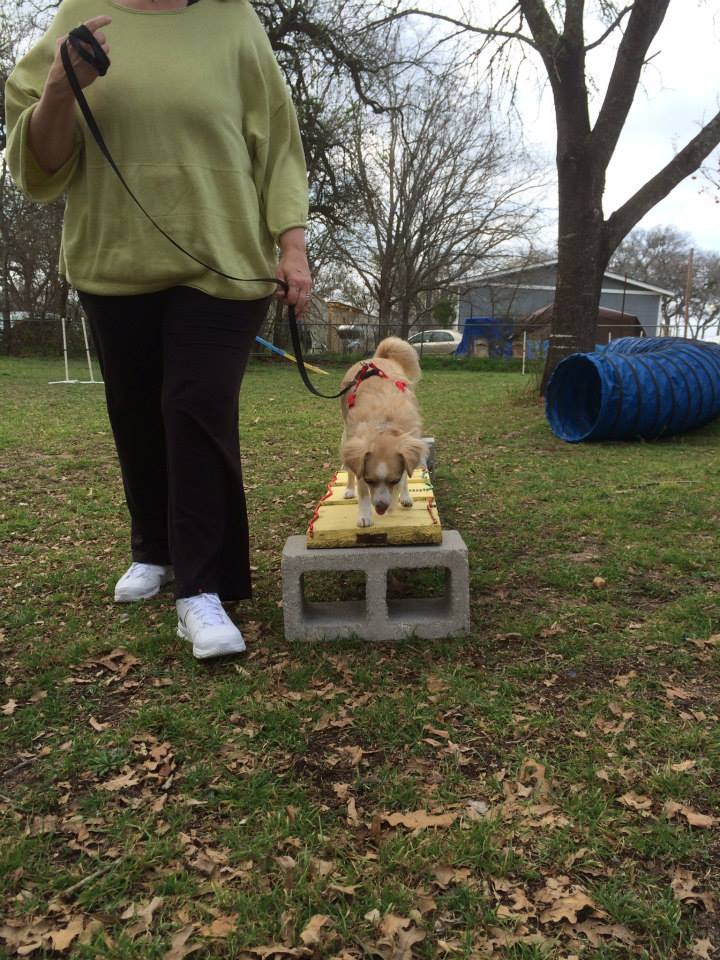
1780870_260703177424326_166425186_n 1902801_255906657903978_1026017817_n

Differently Abled Myths and Facts


MYTH FACT
They are or will become aggressive. There has never been a documented fatality involving a differently-abled dog. They learn through touch, which makes them more tolerant to our natural rudeness of overly touching/coddling.
They startle easier. All dogs startle. The majorities of documented dog bites caused by startle, are from under-socialized and untrained hearing and seeing dogs. Differently-abled dogs use their sense of smell and typically know something is coming before a hearing and seeing dog does.
They need constant supervision. Hundreds of dogs with sight and hearing are admitted to surgery due to obstructions because they were left unattended. If you have a dog, any dog; you should own a crate.
They can hurt themselves if not protected. All dogs are in danger if not supervised. Differently-abled dogs learn their surroundings and memorize it. Most can navigate the environment smoother then hearing/seeing dogs. There are many cases where a dog that can hear and see, has run into something in an excited stage and injured him/herself. Differently-abled dogs count their steps, learn through scent and are more cautious which keeps them safer.
They come with high medical potential. Differently-abled dogs cost no more then others. They need the same routine health care as their brothers and sisters. They are not sick all the time.
They don’t play. The worst myth yet. All dogs play, differently-abled dogs play through scent and touch instead of hearing and sight. They play ball, chase, tug, and wrestle; just as all dogs do.
They can’t lead normal lives. Everyday, hundreds of differently-abled dogs lead normal lives. They adapt to their environment and adjust through other senses. They are natural survivors.
They can never be happy. They play, live, love and survive just as any dog out there. Ask any owner of a differently-abled dog and you will hear how excited they are by the presence of them, how affectionate they are, and how loyal they are. Differently-abled dogs truly do not know they are different. Other dogs play with them and treat them as any other pack member.
They can’t be housebroken. All of my clients have housebroken their dogs the same way, crate, leash and routine. It does not change because a dog cannot see or hear, consistency is key to housebreaking.
Transport stresses them out. Transport can be as smooth as any other dog. You have the same hurdles, car sickness or anxiety. Recommended transport is in a crate or seat-belted in a harness. The vibration tends to make them sleep.
They cannot live with children. All dogs have the potential to bite a child. I personally had sixty-four cases last year of child biters; all were hearing/seeing dogs. A differently-abled dog can do fine with a child as long as they are supervised and taught how to interact with them (the child that is).
There are no resources out there for help. There are rescues, trainers and groups out there to help adopters. We will post a list on our site soon.  We offer Skype/Facetime appointments for owners outside of Austin Texas and we also offer training to trainers interested in helping differently abled dogs.
It will stress them to have many hands touching them in rescue. On the contrary. The more hands that touch your differently-abled dog the better! This is a great way to socialize them.
They are long term fosters. Differently-abled dogs can and should be promoted just as the other dogs in your rescue. One great way to do this is to list the commands they already know- commands you must teach them for everyday life anyway. Go over the myth sheet and explain the focus they will get from their dogs. A great way to promote them to is to offer a 2-week foster to adopt program. Most people are more likely to adopt after they fall in love, if they feel they are not trappedinto a commitment.


If you have any questions at all, need help, or are interested in learning how to train a differently abled dog, please email us:


tdawginfo@gmail.com